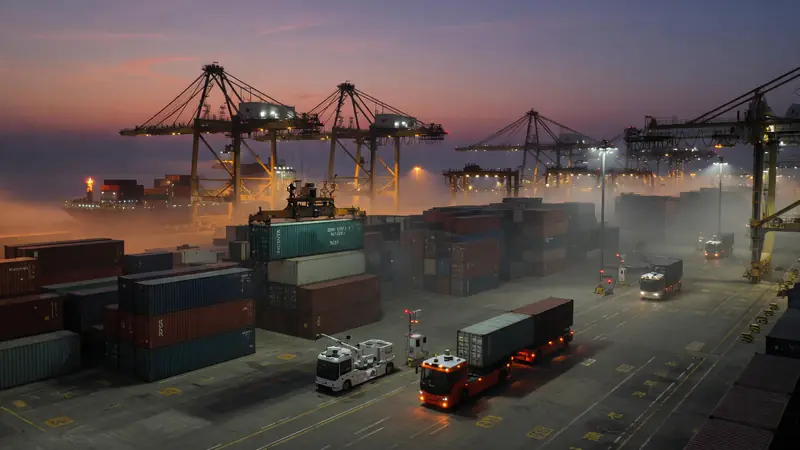
Advanced manufacturing is where China’s industrial story stops being abstract GDP and becomes machines, takt time, and yield. SMT lines that place thousands of components per hour. Automation that removes whole classes of human error. Quality systems that either protect a brand or destroy it. Occasionally, lights-out floors that run while the lights stay dark.
This is the Learn layer. Visit pathways: Scale and Frontier.
Definition: beyond “made in China”
Advanced manufacturing here means:
- Electronics assembly density — SMT, AOI, reflow, test — the backbone of modern hardware.
- Automation mix — industrial robots, cobots, AGVs, software-defined lines.
- Process capability — statistical control, changeover speed, yield culture.
- Factory systems — layout, logistics inside the plant, energy, people-plus-machines design.
- Volume elasticity — ability to scale or reconfigure when demand spikes.
If you only visit a headquarters lobby, you have not seen advanced manufacturing. If you stand next to a running line with an operator translating, you have.
GBA manufacturing geography
- Shenzhen — electronics, automation suppliers, prototype-to-production culture.
- Dongguan — classic “world’s factory” density; still the floor many visitors need.
- Foshan — industrial base and manufacturing operators in the broader bay story.
- Guangzhou — trade and logistics coupling; infrastructure speed as a manufacturing enabler.
- Hong Kong — capital, contracts, and the two-system edge for international firms.
The public Latest Byte circuit stitches these into eight days of access effort, not a multi-month research project.
What “China speed” actually is
“China speed” is often misread as unlimited overtime. Operators see something more interesting:
- Decision latency is short — changes propagate without multi-month committee cycles.
- Supplier adjacency means tooling and parts are hours away, not ocean voyages.
- Automation investment is pragmatic when unit economics justify it.
- Shift culture and process discipline still matter; robots do not erase management.
Visitors who leave with only “wow, busy” have missed the lesson. Visitors who leave with a model of how process + supply + automation combine can brief a board.
Factory classes (access honesty)
| Class | Learning | Notes |
|---|---|---|
| SMT / electronics floor | Real assembly physics | Flux, sound, pace — unforgettable |
| Discrete manufacturing | Metal, plastics, assembly | Varies by industry |
| Automated EV / high-mix lines | Robot density + human stations | Often access-constrained |
| Lights-out / dark factory | Full automation narrative | When it opens, it rewires assumptions |
| Quality / metrology rooms | How defects die | Under-visited, high value |
No brand guarantees. Premium access is density and interpretation.
Policy and industrial priority — 15th Five-Year Plan anchor
Advanced manufacturing — labelled High-end Equipment in China’s 15th Five-Year Plan (2026–2030) — sits in the Tier-1 strategic emerging industry group alongside smart manufacturing and industrial internet. The plan treats automation, precision systems, and factory intelligence not as optional upgrades but as declared pillars of the next industrial cycle.
For visiting executives, the practical read: policy gravity pulls capital toward automation, cluster logic concentrates suppliers, and the factories you walk are not random — they are where the state has decided the future of production will be built. Operators still win or lose on execution. But the direction is set.
Quality, IP, and foreign-company anxiety
Honest industrial intelligence includes the hard topics:
- Quality is engineered, not assumed — process windows, inspection, culture.
- IP risk is real; so is competence risk from never visiting.
- The best defense is often better judgment and better relationships, not isolation from the industrial base.
We do not sell fear. We sell literacy so organizations choose China engagement with eyes open.
Entity graph
- Robotics — the automation layer.
- Supply chain — the market and logistics layer.
- EV & batteries — high-stakes manufacturing exemplars.
- Hardware engineering — design literacy that feeds factories.
Advanced manufacturing is the bridge between design and volume — the middle of the China graph.
What visitors take home
- A mental model of line design and automation mix.
- Vocabulary for yield, changeover, and cost drivers.
- Sensory memory of a real floor (better than any stock photo).
- Clarity on whether their product is ready for Chinese manufacturing partners.
From learning to visiting
| Intent | URL |
|---|---|
| Learn | this page |
| Visit (ops / sourcing) | Scale |
| Visit (deep tech / automation) | Frontier |
| China hub | /en/china/ |
| Buy conversation | Booking |
Closing
China’s industrial future is not only AI headlines. It is factories that already run the systems those headlines depend on. Advanced manufacturing literacy is how Western decision-makers stop guessing about cost, quality, and timing — and start working with the gears they have finally seen.